20130608
Farewell and closure of the Blog
This has been one of the most interesting subjects I've had in the degree until now. I enjoyed not having a final exam and making all these presentations. Now I feel more confident at the blackboard in front of a class and also I have learned a lot of ways of helping the children in different situations. This course has been really useful to me and I am pleased of having attended to all classes.


School Guidance Plan
The school guidance plan was the last project of the course. We had to develope an entire school guidance plan (plan de acción tutorial). To do it we looked at the examples we had in the virtual campus and after that we went to a high school and we asked for a plan to analyze it and see the parts better.

It was very complicated to do because school guidance plans can have different organizations and they have lots of information. Finally when we understood every part of the plan we made a prezi presentation and we explained it in class. It was very hard to put everything in a presentation, but we were able to do it. Finally we wanted our classmates to understand it well, so we looked for real cases in schools which were being solved in Spanish schools. Some of them were recent and were nor solved yet, but we could see how the professionals were dealing with it.
Here are some of the cases we chose:
http://www.pdfhost.net/index.php?Action=DownloadFile&id=fff01f20238d49067fa70a5924f5171a
http://www.pdfhost.net/index.php?Action=DownloadFile&id=19d2e541626af1c30bd43d410b821dfd
http://www.pdfhost.net/index.php?Action=DownloadFile&id=c2711ac5ce65176cc88c4fb49ad19089
This last project has been interesting to know more about how the counselling department works in an educational centre, but it was a long project and we were a little bit shortof time. I think that if we had had more time to do it we could have done a more creative job.


It was very complicated to do because school guidance plans can have different organizations and they have lots of information. Finally when we understood every part of the plan we made a prezi presentation and we explained it in class. It was very hard to put everything in a presentation, but we were able to do it. Finally we wanted our classmates to understand it well, so we looked for real cases in schools which were being solved in Spanish schools. Some of them were recent and were nor solved yet, but we could see how the professionals were dealing with it.
Here are some of the cases we chose:
http://www.pdfhost.net/index.php?Action=DownloadFile&id=fff01f20238d49067fa70a5924f5171a
http://www.pdfhost.net/index.php?Action=DownloadFile&id=19d2e541626af1c30bd43d410b821dfd
http://www.pdfhost.net/index.php?Action=DownloadFile&id=c2711ac5ce65176cc88c4fb49ad19089
This last project has been interesting to know more about how the counselling department works in an educational centre, but it was a long project and we were a little bit shortof time. I think that if we had had more time to do it we could have done a more creative job.
20130606
The conference
In today's class we have seen how a conference with parents should be done,but first of all we should ask ourselves... What is a parent-teacher conference? A parent teacher conference is a meeting between a student's parents and teacher or teachers, to discuss the child's progress academically, socially and with regard to expected classroom behavior. Other topics such as homework and emotional or friend challenges may also come up. To learn this we have seen a video of an American conference which was perfectly run. After that we have said outloud the characteristics that we have liked the most about this conference. After that we have seen a Spanish conference which was awful and was full of mistakes. We have compared both and what the teacher should have done. Some of the important concepts are:
1) Go to the door and welcome the parents
2) First of all, talk about the good achievements of the kid and then about the negative aspects

3)Have the resources that the kid has used over the course available.

4)Be confident.

5)Be punctual to the meeting.
6)Put some objectives in common with the parents and state a date to check if everything is going as planned
After all of this, some classmates have made representations of conferences in different situations (divorced parents, single mother...) and how to run them
.Today's class was incredibly useful because it is really important how to run a conference in a good way and not making the parents angry. It is also important because if the kid sees that there is a good communication between the teacher and the parents, he will feel more motivated to keep studying and paying attention to the classes, and to modify his behaviour if necessary. There were some things that I had guessed that where this way but I did not know other pieces of advice, so this has been fun and important for our careers.
20130531
Ricardo's mother.
This year in this class we have the luck of having a classmate whose mother is a counsellor. Today she has come to the university and she has given us a speech about what the life of a counsellor is like. One of the main points of her speech was how the times have changed during the last decades and above all with the L.O.G.S.E, which introduced the counsellors in the school.
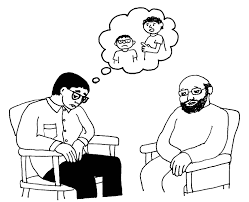
I really have enjoyed this experience and I have discovered a lot of things about the education history and counsellors.
I have found today's class really useful because we have seen the job of a counsellor from a closer point of view. She has also answered to all the doubts we had and the job of a counsellor is more inspirational now. This is the power point presentations she has used:
Counselling1 from naquestas
I really have enjoyed this experience and I have discovered a lot of things about the education history and counsellors.
20130530
Changing Paradigms
In today's class we have seen the following video, made by the known speaker Sir Kevin Robinson.
This man is an English author, speaker, and international advisor on education. He was Director of The Arts in Schools Project, Professor of Arts Education at the University of Warwick , and was knighted in 2003 for services to education.
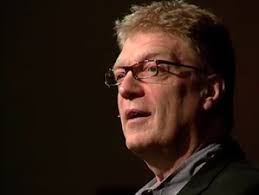
This video has been really important too, because we have seen that people who were not good at school were genius later , so we have to discover the strong points of all our students, and motivate them as much as possible.
This man is an English author, speaker, and international advisor on education. He was Director of The Arts in Schools Project, Professor of Arts Education at the University of Warwick , and was knighted in 2003 for services to education.
Today's class has been really interesting, we have discovered that we (the people and teachers) are the ones who can change the paradigm.
After that we have seen the following video
After that we have seen the following video
This video has been really important too, because we have seen that people who were not good at school were genius later , so we have to discover the strong points of all our students, and motivate them as much as possible.
20130529
Attention to diversity: designing a collaborative activity
This project was also a collaborative project in which, in our groups, we had to develop an activity about the topic (attention to diversity) and explain it to the rest of the class in an hour. Inside the topic of attention to diversity my group had "Support Measures for learners in Early Childhood and School Education". To do this work the first thing we did was read and study the papers that we had in the Campus.
 After that we decided to present it in a prezi, given the fact that it is a very dynamic program and the people wouldn't be very bored. What we wanted was a very dynamic class, so at first we presented a short presentation and after that we suggested a game. In this game our mates, in groups of three, had to make questions related to the topic. After that they had to ask questions to the other groups and when they said the answer right they obtained a point. We do not like when some teams stop playing because they do not answer correctly, so in this game there was no eliminations. Finally, we presented some situations related to the topic and the people had to find what was the best thing to do depending on the case. Some of the cases were these:


"Marisa is 8 years old and she has got the Aspergen Sindrome,
she has got difficulties making friends".
"Félix parents can
not take him to school because they have to work when it starts"
"Mike’s parents have discussions frequently and her sister plays the
fagot, so he can not bring his homework on time"
I have found this activity very interesting because we have had to develope an entire class and to keep them entertained and learning. We had to organise the timing very well and I think we have done an awesome job because the people had fun and they learnt a lot designing and answering questions. I would even repeat this activity with other topics.

20130527
Group of experts
In this activity we had to work in new groups, in a collaborative way, this means that a group of people learn something together. The proccedure was like this:
At first we were with one group and we were handed different papers. After that we had to look for people who had the same papers as us. In this new group in which we all have the same papers we were told to develope the best way to explain the paper to the people who were in our group before.
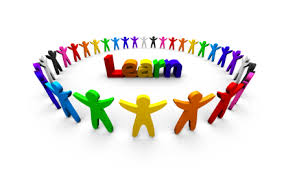

At first we were with one group and we were handed different papers. After that we had to look for people who had the same papers as us. In this new group in which we all have the same papers we were told to develope the best way to explain the paper to the people who were in our group before.
After sharing this information, we were told to study this paper because we were having a test the next day. The next day, we had the test. In the first session we answered the questions by ourselves, without any help of any mate, but later in the second time of the session we could compare anf fill our answers with the help of our colegues.
The papers we had to learn contained the following topics:
1. Spain: Guidance and Counselling in Early Childhood
2. Spain: Guidance and Counselling in Higher Education
3. Spain: Guidance and Counselling in a Lifelong Learning Approach
4. Spain: Support Measures for Learners in Adult Education and Training
In my opinion this exercise has been a little bit confusing and we did not have enough time to read and understand our papers and then explain them in a proper way to other people, but when I studied it at home I found the informations really interesting and I have learnt a lot about how the guidance and counselling is given in Spain..
Webquest
The first activity we have made is the webquest. A webquest implies activities, using Internet resources, which encourage students to use higher order thinking skills to solve a real messy problem. To understand the subject the most important concepts are:

Counsellor
is someone who helps students throughout their education. This may include counselling
in areas of academic achievement, career choices or personal and social
development. These professionals work with students of all ages, from primary
schools through college. It is the responsibility of a School Guidance
Counselor to help students develop goals academically and evaluate strengths,
weaknesses, likes and dislikes. School counsellors at all levels also help
students deal with personal, social and behavioural issues.

3- Who provides the services of counselling?
The principal of the school, a guidance program coordinator, an information officer, an office administrator or lecturer with educational psychology studies.

These were the main points of the Webquest. I have found this activity really useful because I have learnt in a deeper way the functions of the counsellor and when his help is provided. All the groups who have made this project have presented a prezi or a power point, which is great to see the main points in a short and clear way. It has been a good opportunity to take a closer look to this subject.
1- What
is counselling?
Counselling is the skilled and principled use
of relationship to facilitate self- knowledge, emotional acceptance and growth
and the optimal development of personal resources. The overall aim is to
provide an opportunity to work towards living more satisfyingly and
resourcefully. Counselling relationships will vary according to need but may be
concerned with developmental issues, addressing and resolving specific
problems, making decisions, coping with crisis, developing personal insights
and knowledge, working through feelings of inner conflict or improving
relationships with others.

2-What
is a counsellor?
3- Who provides the services of counselling?
The principal of the school, a guidance program coordinator, an information officer, an office administrator or lecturer with educational psychology studies.

These were the main points of the Webquest. I have found this activity really useful because I have learnt in a deeper way the functions of the counsellor and when his help is provided. All the groups who have made this project have presented a prezi or a power point, which is great to see the main points in a short and clear way. It has been a good opportunity to take a closer look to this subject.
20130523
Counselling 2013

During the
year 2013 we have done several activities relationed with the school guidance
and counselling. We have realised plenty of projects which I am going to explain here besides my opinion of the activities and what I have learned from them. I hope you enjoy it.
Suscribirse a:
Comentarios (Atom)